 Post by: Jenna Vincent, Global Education Communications intern
The University of Georgia’s College of Agricultural and Environmental Sciences offers study abroad experiences to CAES students that focus on the ecology, biology, and economic insights of countries ranging from South Africa to Europe to Asia.
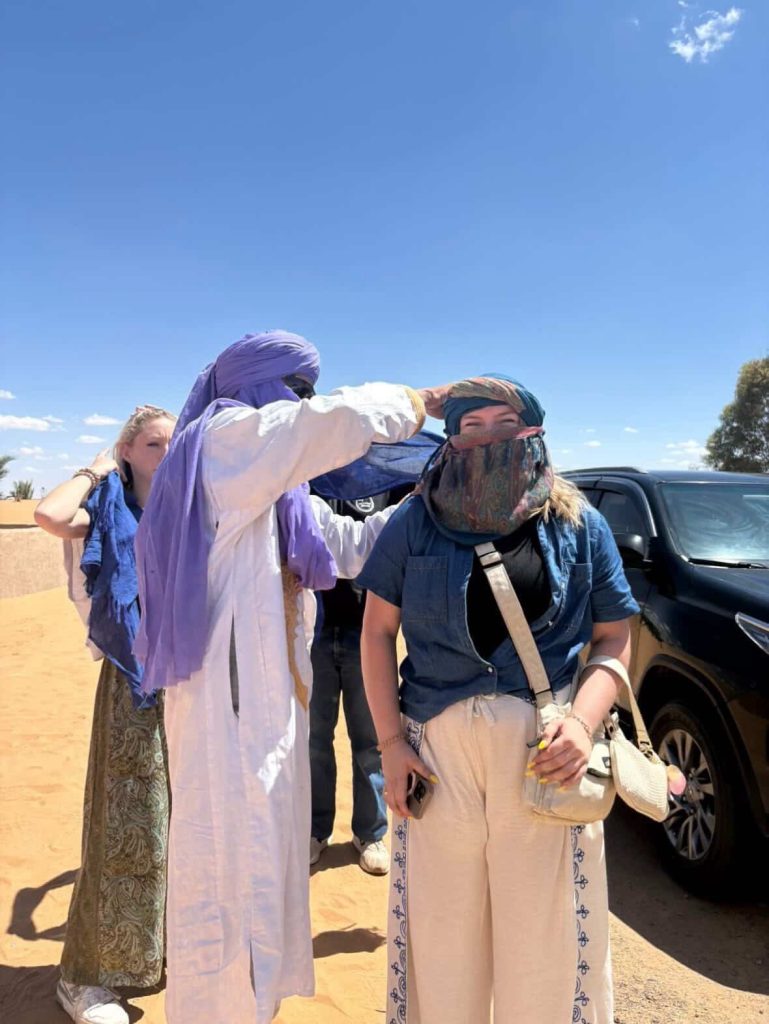
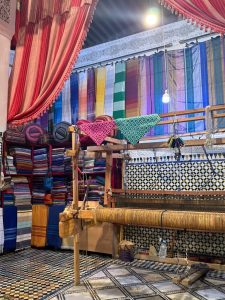
 UGA-CAES student Lauren Coley speaks on her experience in one of the many faculty-led programs abroad, “My study abroad program is [the] UGA – CAES Comparative Study of Agriculture, Community, and Organizational Development in Morocco.” Students spend the two-week journey traveling across the “Western Kingdom,” experiencing different local farming practices and learning how these factors shape the cultural diversity of Morocco. Coley remarks, “[A] major highlight was traveling across seven cities in thirteen days, giving us the chance to experience nearly every region of Morocco. With each stop, we compared food traditions, cultural practices, and religious influence through guided tours of cities, heritage sites, and local industries.”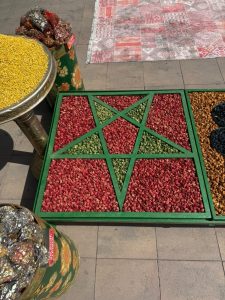
Dr. James C. Anderson, II, an Associate Professor of Agricultural Leadership, Education, and Communication, speaks on the importance of students experiencing first-hand places not usually visited for a study abroad program, “Morocco is vastly different from the U.S. and the typical Western European destinations our students often visit. I’ve found that this distinct cultural divergence, combined with the country’s welcoming and safe environment, creates the perfect space for students to test the boundaries of their cultural competence. At the same time, they get to fully immerse themselves in the vibrant sounds, rich tastes, and breathtaking landscapes that Morocco has to offer.”
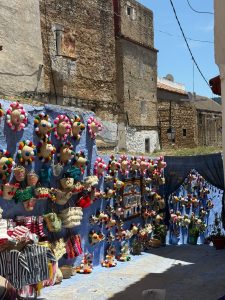 UGA-CAES faculty-led study abroad programs focus on bringing the ‘roots’ to the forefront when it comes to understanding resource production. Coley makes this comparison in talking about how the Morocco program reflected her major in Regenerative Bioscience, “It is through my major that I’ve also come to understand how essential governmental policy and organizational development are in creating ethical and efficient working environments. My study abroad integrated these relationships between agriculture, community, and organizational development, and it provided me with a unique global perspective I could never relate to otherwise.”
Morocco is just one of 14 faculty-led programs offered to CAES students. The importance of these types of programs is their emphasis on connection. Students, like Coley, have the opportunity, both academically and emotionally, to create deeper connections, supported and encouraged by faculty. Anderson speaks on this, “We know that simply sending students abroad isn’t enough to evoke meaningful transformation; they need directed reflection to make sense of these teachable moments.” These teachable moments have CAES students learning how other countries address modern challenges in agriculture, community, and organizational development, and how cultural norms impact leader decision-making and policy implementation. “When students face the inevitable challenges of navigating a new culture, faculty are there to observe, support, and guide. We bridge the gap between a student simply having an experience and actually transforming that experience into deep, lasting knowledge.”
Coley speaks on her final thoughts of her experience abroad in Morocco, “This was my third study abroad, and each experience has grown my cultural intelligence and appreciation for different walks of life. It has also been so much fun to travel and have these formative, independent experiences with new friends from UGA and around the world! The community you build from studying abroad with other students is one of my favorite parts, and I’ve made some of my closest friends through these experiences! A great way to get out of your shell is to study abroad with UGA!”
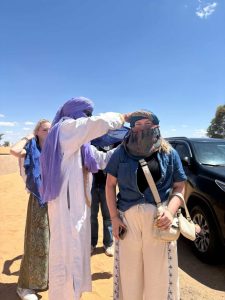
Q&A with Lauren Coley, Junior
What is your study abroad program?
“My study abroad program is UGA – CAES – Comparative Study of Agriculture, Community, and Organizational Development in Morocco – Maymester, 2026.”
What is your major, and how has this program aligned with your major?
“My major is Regenerative Bioscience, I have a minor in Applied Biotechnology, and I have a certificate in Global Education and Leadership. Through my time in the CAES, I learned to appreciate the roots that agriculture has in almost every aspect of life. Agriculture and my major are not always viewed in tandem, but my research with the Regenerative Bioscience Center and the Animal and Dairy Science Department wouldn’t exist without the farmers who raise the livestock that make such work possible. It is through my major that I’ve also come to understand how essential governmental policy and organizational development are in creating ethical and efficient working environments. My study abroad integrated these relationships between agriculture, community, and organizational development, and it provided me with a unique global perspective I could never relate to otherwise.”
What are some highlights of your experience abroad?
“One of the highlights of my study abroad experience was meeting students from ENA Meknès, Morocco’s National School of Agriculture. We toured their university and learned from master’s and PhD students conducting research across fields ranging from rural engineering to agronomy and ecology. What stayed with me most was realizing how much we had in common as students and as people, with our conversations ranging from the college experience to TV shows we all liked! Another major highlight was traveling across seven cities in thirteen days, giving us the chance to experience nearly every region of Morocco. With each stop, we compared food traditions, cultural practices, and religious influence through guided tours of cities, heritage sites, and local industries.”
Would you recommend this study abroad program to others?
“I would absolutely recommend this study abroad program to anyone interested in agriculture, policy, or expanding their global perspective! While this program was through the College of Agricultural and Environmental Sciences, students came from the School of Public and International Affairs, Te
rry, etc.”
What is one takeaway you feel like you learned abroad?
“One of my biggest takeaways from this trip was learning how a global perspective in your future career field can truly diversify your industry insight and ability to work with diverse groups of people.”
Lauren’s takeway:
“This was my third study abroad, and each experience has grown my cultural intelligence and appreciation for different walks of life. It has also been so much fun to travel and have these formative, independent experiences with new friends from UGA and around the world! The community you build from studying abroad with other students is one of my favorite parts, and I’ve made some of my closest friends through these experiences! A great way to get out of your shell is to study abroad with UGA!”
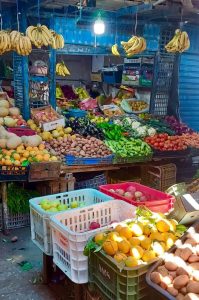
James C. Anderson, II, Associate Professor Agricultural leadership, education, and communication:What do you feel is the most important aspect of faculty-led study abroad programs?
“The true value of a faculty-led study abroad program lies in the intentional academic and emotional support faculty provide. We know that simply sending students abroad isn’t enough to evoke meaningful transformation; they need directed reflection to make sense of these teachable moments. When students face the inevitable challenges of navigating a new culture, faculty are there to observe, support, and guide. We bridge the gap between a student simply having an experience and actually transforming that experience into deep, lasting knowledge.”
What are some experiences and takeaways you hope UGA-CAES students gain during their time abroad?
“Our goal is to cultivate global leaders. The UGA-CAES students experience first-hand how another country addresses modern challenges in agriculture, community, and organizational development, and how cultural norms impact leader decision-making and policy implementation. At the same time, they are learning leadership theories and developing their own philosophies about how to lead in a global society. Ultimately, I hope our students gain a deeper understanding of their own leadership style and learn how to tackle complex global issues collaboratively. Beyond the professional skills, I want them to develop a genuine passion for exploring the world and experiencing new cultures.”
Why is it important for UGA-CAES students to experience first-hand places like Morocco?
“Morocco is vastly different from the U.S. and the typical Western European destinations our students often visit. I’ve found that this distinct cultural divergence, combined with the country’s welcoming and safe environment, creates the perfect space for students to test the boundaries of their cultural competence. At the same time, they get to fully immerse themselves in the vibrant sounds, rich tastes, and breathtaking landscapes that Morocco has to offer.”